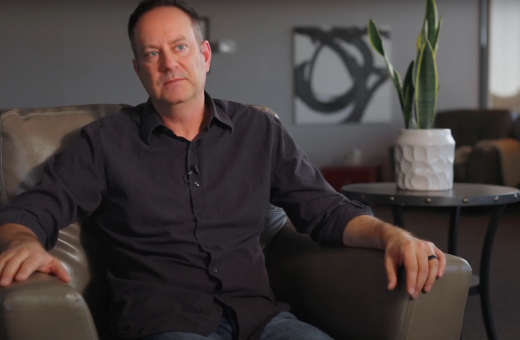
By Dr. Floyd Godfrey
Uncertainty has a way of stirring deep anxiety within the human heart. When life feels unpredictable, many individuals respond by tightening their grip on control, attempting to force clarity through effort, planning, or even emotional intensity. Yet Scripture offers a very different path. Proverbs 3:6 reminds us, “In all your ways acknowledge Him, and He shall direct your paths” (New King James Version, 1982). This verse invites believers to release the exhausting struggle for control and instead lean into a posture of trust and surrender.
The phrase “in all your ways” speaks to the comprehensive nature of our dependence on God. It is not limited to major life decisions, but extends into daily routines, relationships, and internal struggles. Often, the “rage of uncertainty” grows when we compartmentalize our faith, inviting God into certain areas while attempting to manage others on our own. This divided approach creates tension, as we bear burdens we were never meant to carry. Acknowledging God in all things is not merely a spiritual concept; it is a practical reorientation of the heart that recognizes God’s authority, wisdom, and presence in every circumstance.
From a psychological perspective, uncertainty can trigger heightened stress responses, including anxiety, irritability, and even despair. Research in cognitive and behavioral sciences highlights how individuals often attempt to reduce uncertainty through control-seeking behaviors, which can paradoxically increase distress when outcomes remain unpredictable (Grupe & Nitschke, 2013). Scripture addresses this cycle by redirecting our focus. Rather than striving for certainty, we are called to cultivate trust in a faithful and sovereign God. This shift does not eliminate unknowns, but it transforms how we engage with them.
To “acknowledge Him” means more than a casual recognition of God’s existence. The Hebrew word used in Proverbs 3:6 conveys an intimate knowing, a relational awareness that shapes decisions and attitudes. It involves seeking God through prayer, aligning our actions with His Word, and remaining sensitive to His guidance. This kind of acknowledgment requires humility, as it means admitting that our understanding is limited. Proverbs 3:5 reinforces this truth, urging us not to lean on our own understanding. Together, these verses present a unified call to trust God fully rather than partially.
When we resist this call, we often find ourselves battling confusion and frustration. The “crooked paths” described in Scripture can represent both external circumstances and internal turmoil. Trying to straighten these paths through our own strength can feel like pushing against an immovable force. However, God promises to intervene when we yield to Him. His direction may not always align with our expectations, but it brings clarity, purpose, and peace over time.
For pastors and parents, this message carries particular significance. Those in leadership or caregiving roles frequently feel pressure to provide answers and stability for others. Yet modeling dependence on God can be far more impactful than presenting an image of certainty. When children or congregants observe a life that consistently acknowledges God, even amid unanswered questions, they witness authentic faith in action. This example teaches that trust in God is not reserved for moments of clarity, but is most powerful in seasons of ambiguity.
Practically, acknowledging God in every way can begin with small, intentional steps. Starting the day with prayer, inviting God into decisions both large and small, and pausing to seek His wisdom during moments of stress can gradually reshape our responses to uncertainty. Scripture meditation also plays a key role, as it anchors the mind in truth rather than fear. Over time, these practices cultivate a deeper awareness of God’s presence and guidance.
It is important to recognize that surrendering control does not mean passivity. Rather, it involves active trust. We continue to make decisions, take responsibility, and engage with life, but we do so with an open hand rather than a clenched fist. This posture allows God to work within our circumstances, aligning our paths with His purposes. As we release the need to fight uncertainty in our own strength, we create space for God to bring order to what feels chaotic.
Ultimately, Proverbs 3:6 offers both a command and a promise. The command is to acknowledge God in all our ways. The promise is that He will direct our paths. This direction may come gradually, unfolding step by step, or it may arrive through unexpected clarity. In either case, it is grounded in God’s faithful character. He is not distant or indifferent; He is actively involved in guiding His people.
In a world marked by unpredictability, the invitation of Proverbs 3:6 remains profoundly relevant. We are not called to conquer uncertainty, but to trust God within it. As we acknowledge Him in every aspect of life, He steps into our confusion and gently straightens the paths before us, leading us toward peace and purpose.
Floyd Godfrey PhD is a Board Certified Christian Counselor and has facilitated groups within different churches and denominations over the past 30 years. He worked as a licensed clinician for 23 years and provided supervision and training for other counselors as they worked toward independent licensure. You can read more about Floyd Godfrey PhD at www.FloydGodfrey.com.
References
Grupe, D. W., & Nitschke, J. B. (2013). Uncertainty and anticipation in anxiety, an integrated neurobiological and psychological perspective. Nature Reviews Neuroscience, 14(7), 488–501. https://doi.org/10.1038/nrn3524
New King James Version. (1982). Thomas Nelson.
Get Started
Fill out form below